
On Gratitude: Seasonal and Super-Short Poems
These brief and beautiful poems are from the vastly underrated NY poet Samuel Menashe.

All week I have been thinking of two very short poems, one on fall, and one on winter, by Samuel Menashe (pronounced Men-AHSH), who did not receive nearly enough recognition in his lifetime—and who is now sometimes referred to as a “neglected master.” The two poems strike me as grateful, but also deeply knowing.
As many of us are noticing, it can be hard to feel grateful at a frightening time—but Menashe (1925-2011) lived through a frightening time, too. And he changed the rhythm of his life and his writing in response. As I walked through New York this week, I thought of him, and wondered what he would say about our world now.
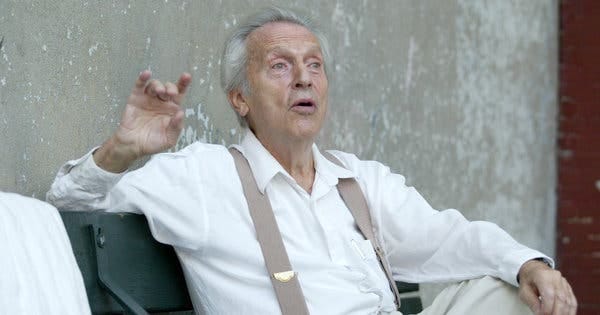
Menashe sitting on a bench in his neighborhood, Greenwich Village, in 2003.
I met Menashe at a poetry reading somewhere in Manhattan when I was in my early 20s. I remember a dapper older man approaching me and telling me he was a poet. In all honesty, I thought he was a kook, because I was used to various people on the subway telling me they were novelists, prophets, poets, geniuses; I had no idea then that he was telling the truth.
He gave me one of his books, and if I remember correctly, he also gave me some loose pieces of paper that he had on him and wanted to share. Menashe, I did not know then, was on a completely different path than most American poets; he did not teach in a university. He worked as a tour guide for the Gray Line buses that dotted New York, or as a French tutor, or a lecturer on cruise ships, and he lived in a rent-controlled apartment in Greenwich Village, which The New York Times described as consisting of “three tiny rooms” for most of his life.
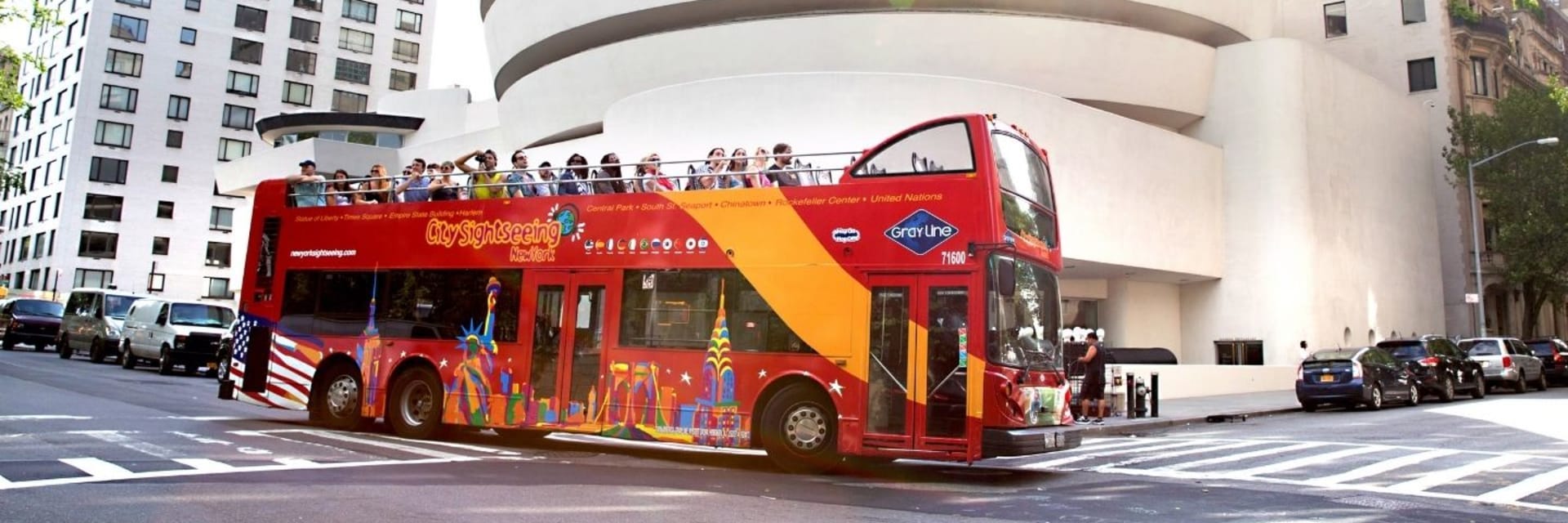
Gray Line bus, doing its rounds in New York. Here, it’s passing the Guggenheim Museum.
He introduced himself to me as “Samuel Menashe,” but his name turned out to be a shortened version of his birth name. “Samuel Menashe Weisberg was born on Sept. 16, 1925, in Brooklyn and grew up in Elmhurst, Queens, where his father, a Jewish immigrant from Russia, ran a laundry and dry-cleaning business,” I found out when I read his New York Times obituary.
Menashe graduated from high school at 16 and fought in the Battle of the Bulge. He was in a company of 190 men; by evening, only 29 remained. The rest were dead, wounded, taken prisoner. That experience changed his perspective on life itself; he lived by the day. (I learned all this too late.) Perhaps, I think, he was grateful for life—and so was able to appreciate the value of a lone day.
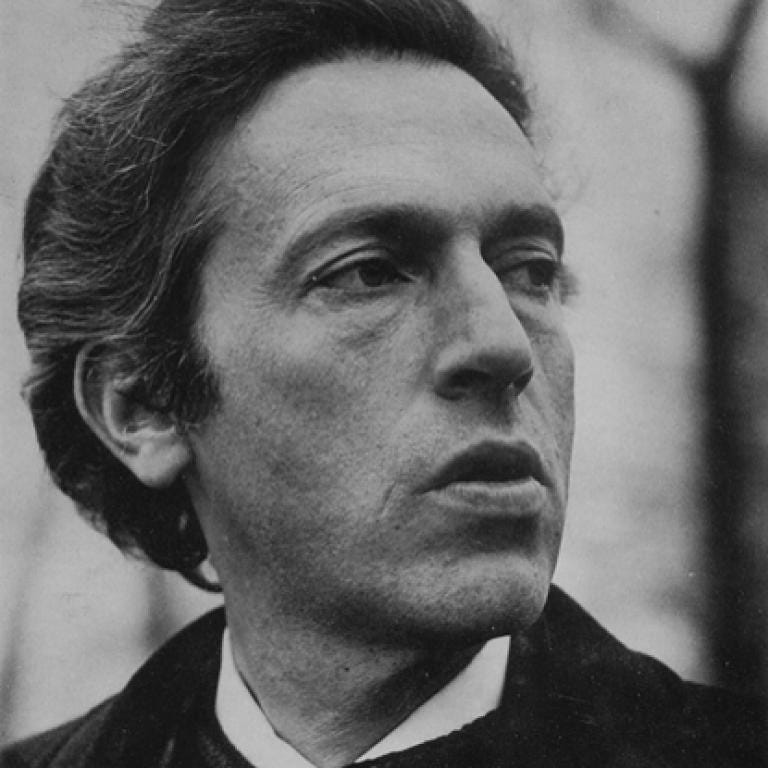
Samuel Menashe’s poetry was first published in Britain. Here he is as a younger man.
Maybe that “day” approach as opposed to “five-year plan” or “ten-year goals” can be felt in his very short poetry. The poet and critic Dana Gioia observed that Menashe’s poems got less attention because of their brevity. I think there are seasons in life, as well as in poetry, and perhaps the super-spare season will return; after all, American poetry has included Emily Dickinson, and more recently, Kay Ryan, both doyennes of the spare poem.
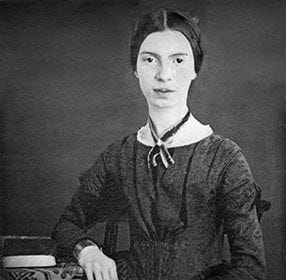
Emily Dickinson.
Menashe’s poems tend to be ten lines, max, and often have no punctuation. My favorite Menashe poems are often ultra-short—four, five, six lines. He struggled to find publishers for his books all his life, and his first book was published in Britain.
In any case, here is “Leavetaking,” which like many of Menashe’s poems is dedicated to his friend John Thornton, with whom he served in the army. When I first read this, I didn’t know who Thornton was; I’ll share more about him later.
LEAVETAKING
Dusk of the year
Nightfalling leaves
More than we knew
Abounded on trees
We now see through
I love how Menashe combines the falling of leaves with the title “leavetaking.” It’s brilliant--the leaves are literally leaving us, and of course, we are leaving summer behind. I also love the lack of punctuation, and the idea that there was more than we knew on the trees. That feeling of being able to “see through” also moves me; yes, the trees are bare, but we can see through them to the world.
I was curious to see what Menashe had to say about other seasons. “Winter” appeared in The New Yorker on February 28, 1970. I imagine that he may have written this in Central Park, as he took the C train there several days a week, for his entire life.
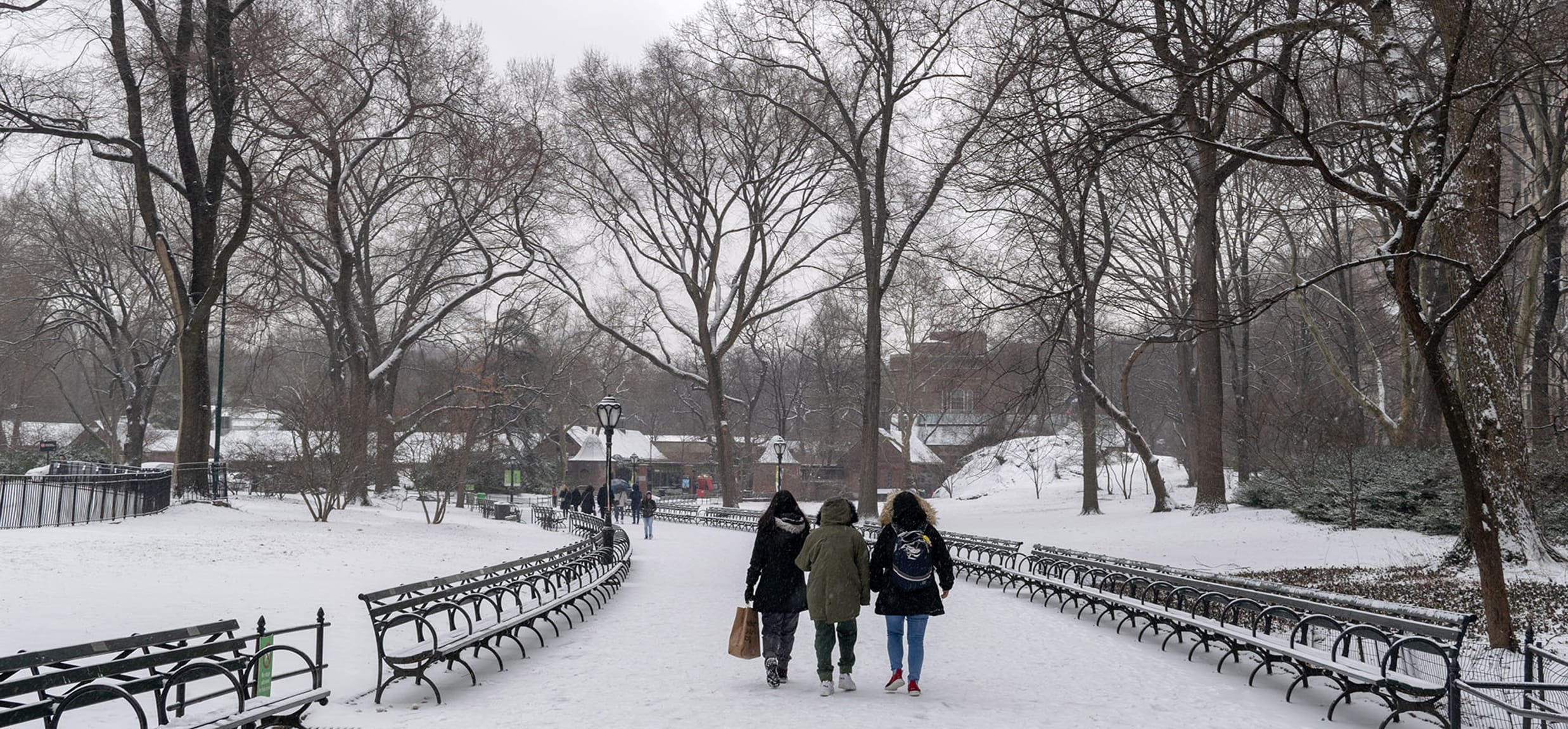
Central Park in winter, from the Central Park conservatory website.
WINTER
I am entrenched
Against the snow,
Visor lowered
To blunt its blow
I am where I go
One of the moving aspects of reading Menashe is how he chronicles getting older. He’s not melancholy; he’s merely observing the change. One of my favorites in this vein is “Salt and Pepper,” which plays with the meaning of condiments and how the language of condiments is used to discuss age, and wisdom.
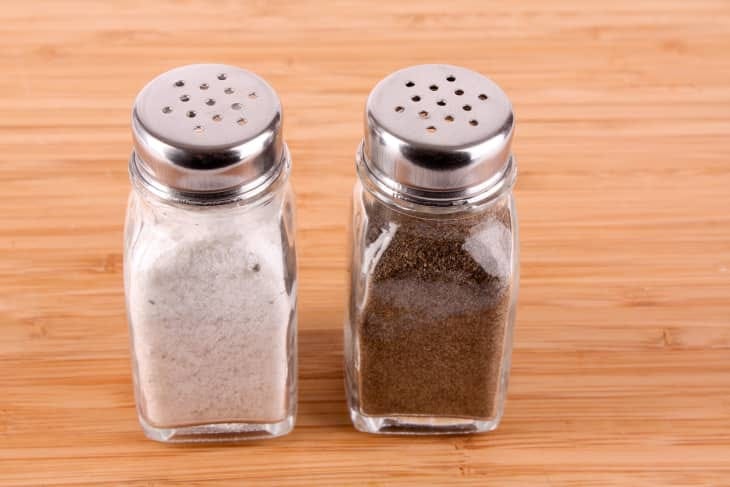
SALT AND PEPPER
Here and there
White hairs appear
On my chest—
Age seasons me
Gives me zest—
I am a sage
In the making
Sprinkled, shaking
Menashe’s books include the out-of-print No Jerusalem but This, which I am currently trying to get from Ebay. (Also—could a book with that title get published now? ) His work was collected in a new edition from Library of America edited by Christopher Ricks, who I used to see in the hallways as a poetry student at Boston University, and that seems to be the most widely available book. But—this is anecdotal—I think Menashe’s work is gaining more interest. I have had several conversations with twentysomething writers and translators who are reading Menashe.
My theory is that ultra-short poetry feels more relevant right now.
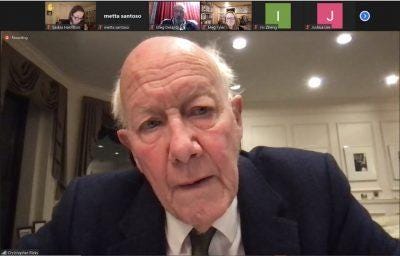
The critic Christopher Ricks
All of this makes me wish they could have met Menashe in person too. I also wish I would have been smarter back then, and would have talked with him longer. I did not realize how rare it was for an older poet to reach out to a much younger one, to share work in progress as well as finished work. So I leave you with this absolutely lovely remembrance of Menashe’s friend John Thornton, which also includes a comment on Menashe.
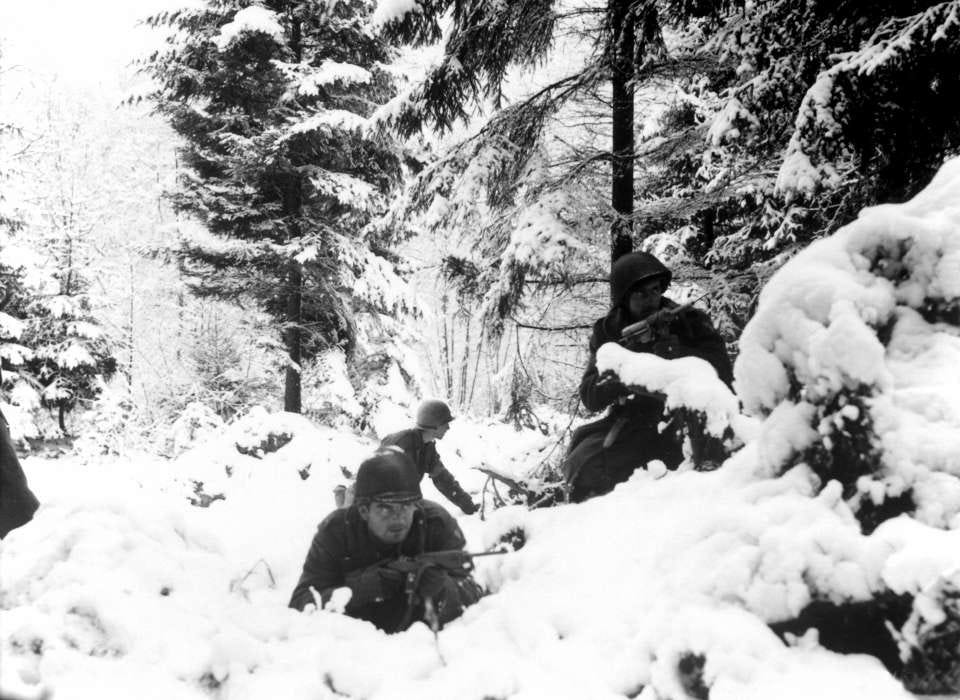
The Battle of the Bulge, 1944. Samuel Menashe was there.
It’s from Ronnye Davies and appears on Dignity Memorial. And yes, I found it by merely Googling. When I met Menashe, Googling people instantly wasn’t yet a thing.
“I didn’t know Mr. Thornton well, but well enough to see what a lovely man he was. I met him at Mt. Sinai Hospital in the radiation oncology waiting room and we spoke almost daily as we waited for our respective treatments. His friend Samuel Menashe was with him every day. They were a fine and handsome pair of gentlemen and probably the only bright spot in an otherwise painful time. I’ve thought of them both often but I couldn’t remember John’s last name until just now. I’m so sorry that they’ve both passed on. I wish I’d met them under happier circumstances. Belated condolences to his loved ones.”
Yes—they were a “fine and handsome pair of gentlemen.” And don’t we all need a “bright spot in an otherwise painful time.” I love this comment, that Menashe was with his friend every day. If that’s not a reason to read his poems again, what is?
Speaking and Teaching
I have received notes from readers of this newsletter asking if I will be a giving a talk nearby sometime soon. I love giving readings and talks, and I also teach classes. If your community is interested in the possibilities, please send a note. Shabbat shalom!
**********************************************************************************************
Hope you found this newsletter meaningful. Thank you for your support of writing with depth.
What a truly wonderful introduction to his work, Aviya. I learned to write spare poems from the late William Packard. I'd like to share one of mine that was published in The New York Quarterly many years ago.
you wear
your sadness
like a raincoat
long ago having
lost the belt
Happy Thanksgiving to you and all of your readers!
Jane R. Snyder
jane@janersnyder.com
Thanks, Aviya!